Site Types for Martini
The graphic below lists the standard site types when mapping proteins using Martini models from the Coarse-Grained Force Field Builder Panel and Coarse-Grained Mapping Panel. [9]
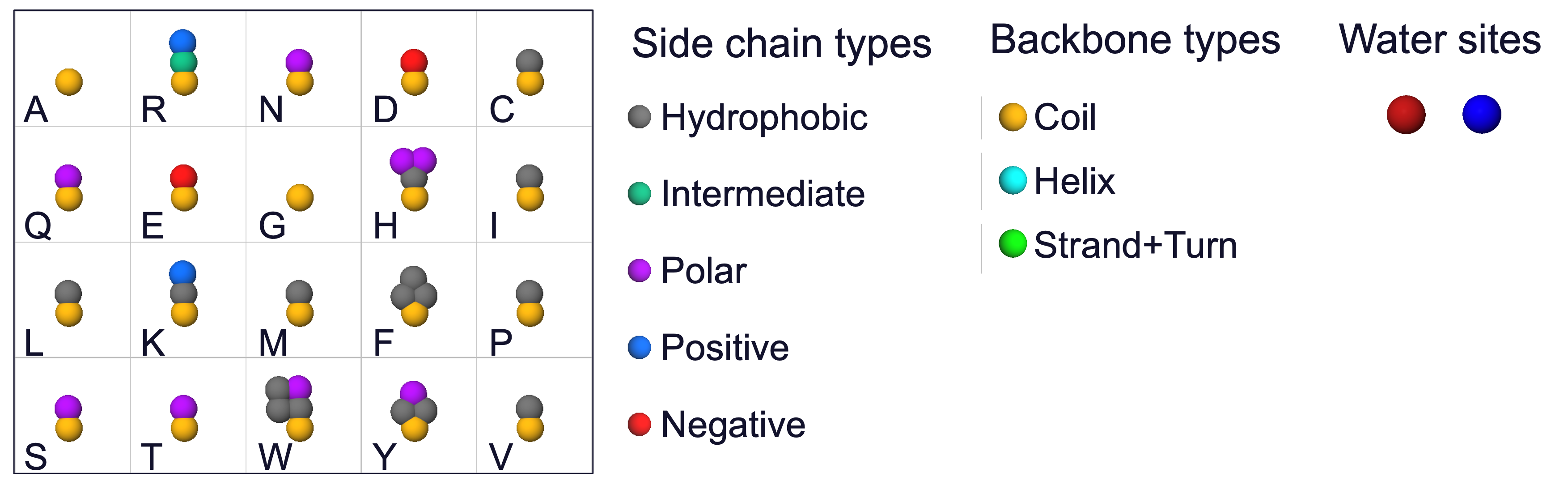
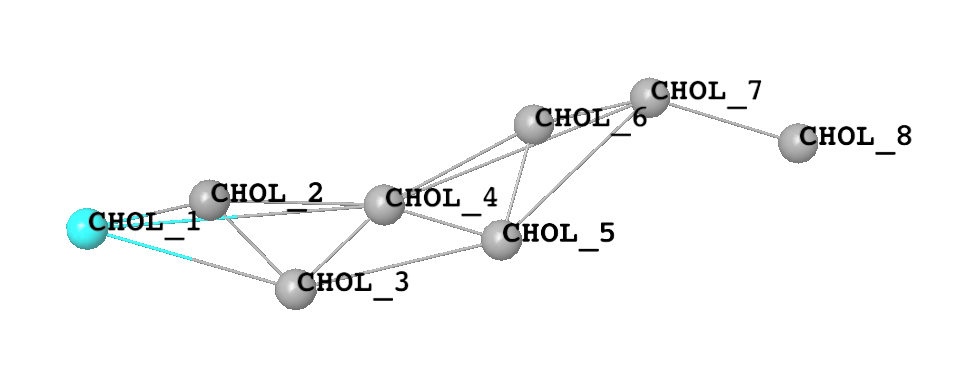
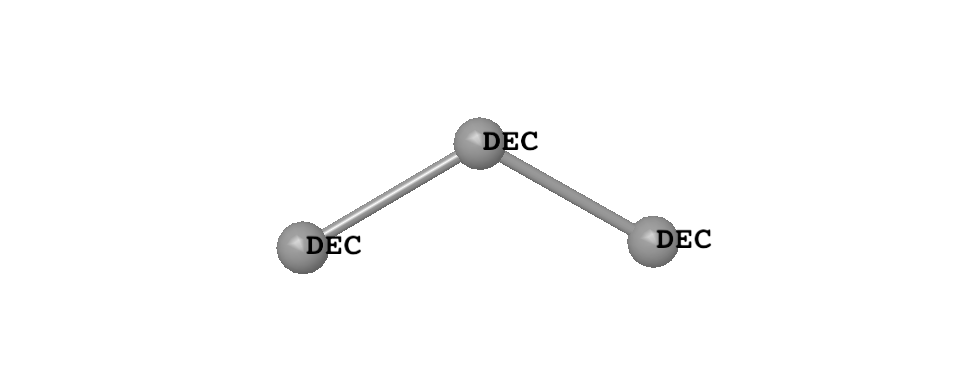
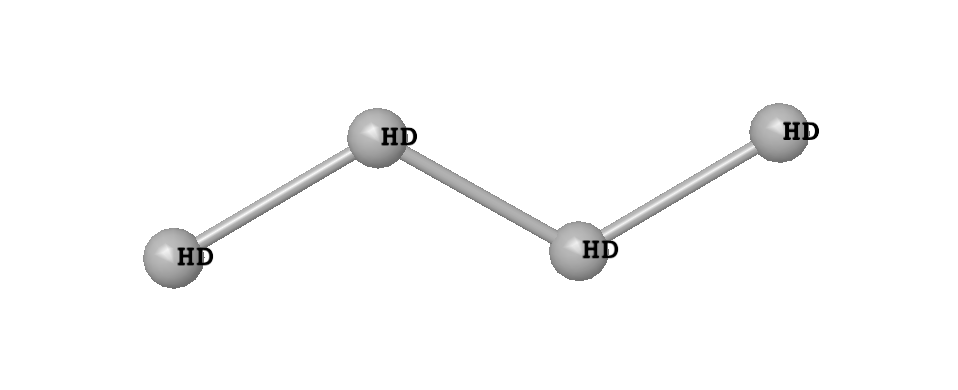
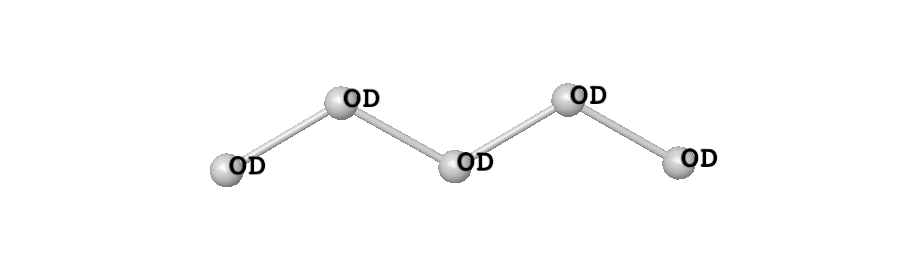
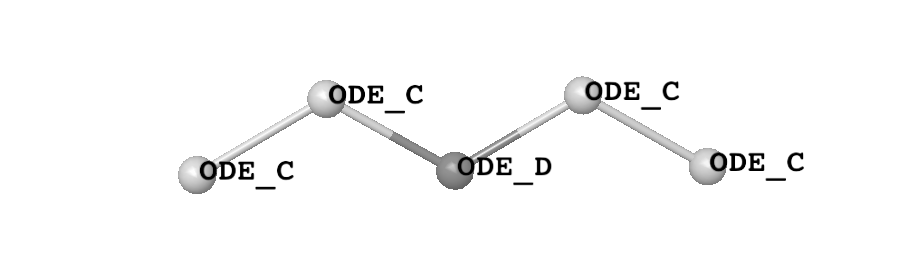
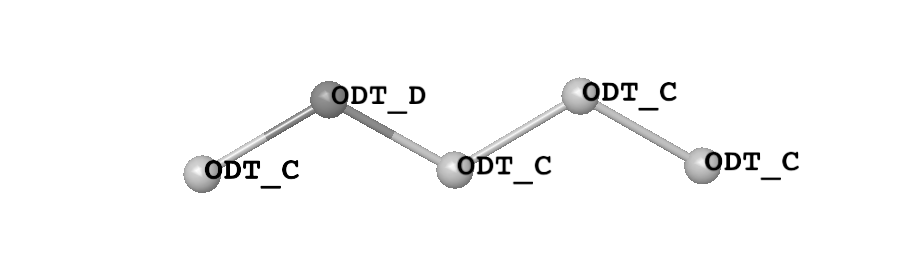
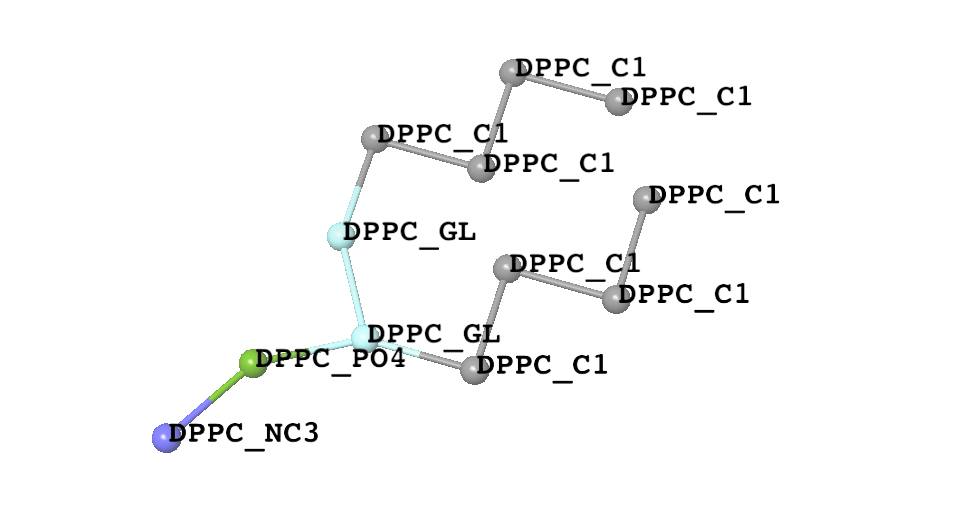
The table below lists site types to use when drawing molecules in the Coarse-Grained Sketcher for Martini models. Unless otherwise noted Ref. [1] is a good basic source of information.
|
Chemical name |
Site type names, with topology diagram for molecules with multiple sites |
Notes |
|
water |
W |
Single water site representing 4 water molecules. |
|
anitfreeze water |
WF |
Single water site representing 4 water molecules. Use for 10% of the water present in the system. |
|
sodium ion |
Na_ion |
|
|
chlorine ion |
Cl_ion |
|
|
calcium ion |
Ca_ion |
|
|
cholorform |
CLF |
|
|
butane |
BUT |
Single site representing ~4 carbon atoms with accompanying hydrogens. Can be used as a building block in larger molecules. |
|
ethanol |
EOL |
|
|
propanol |
POL |
|
|
ether |
ETH |
|
|
butanol |
BOL |
|
|
acetic acid |
ACH |
Uncharged acetic acid |
|
benzene |
|
3 equivalent ring sites are used [2]. |
|
chlorobenzene |
|
2 equivalent ring sites with 1 combined Cl/ring site [3]. |
|
cyclohexane |
|
|
|
octane |
|
|
|
octanol |
|
|
|
cholesterol |
|
|
|
dodecane |
|
|
|
hexadecane |
|
|
|
octadecane |
|
|
|
cis-octadecene |
|
Cis double bond near the middle of the chain. |
|
trans-octadecene |
|
Trans double bond in the first half of the chain. |
|
dipalmitoyl-phosphatidyl-choline (DPPC) |
|
|
|
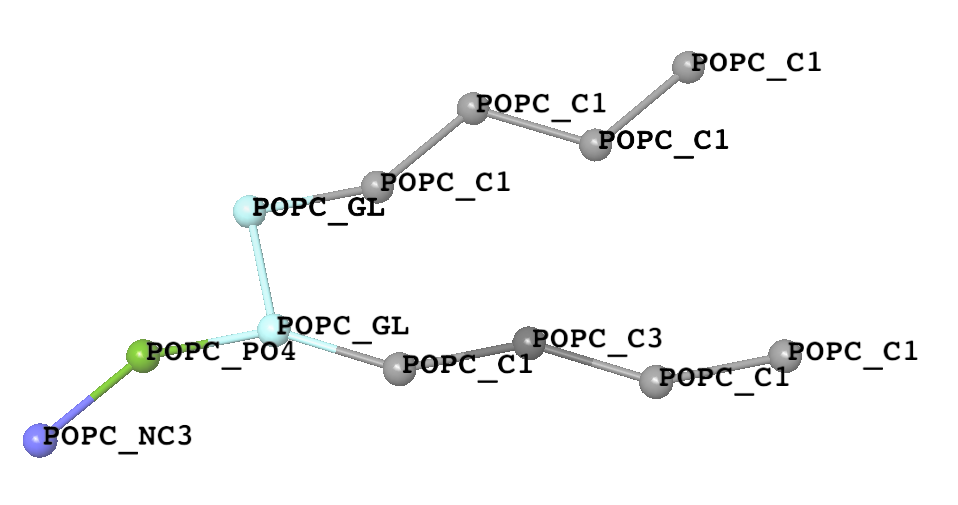
1-palmitoyl-2-oleoyl-sn-glycero-3-phosphocholine (POPC) |
|
|
|
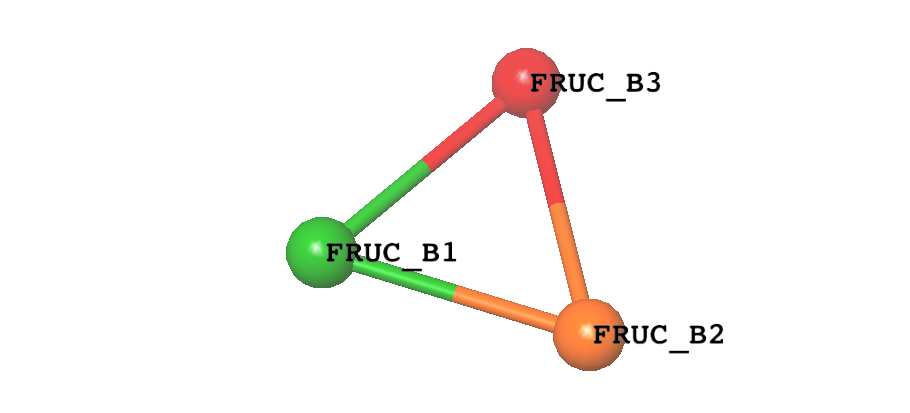
fructose |
|
See Ref. [5] |
|
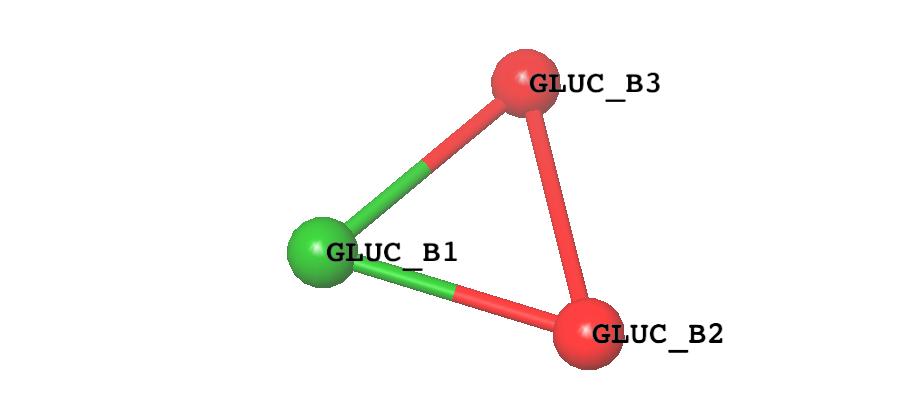
glucose |
|
See Ref. [5] |
|
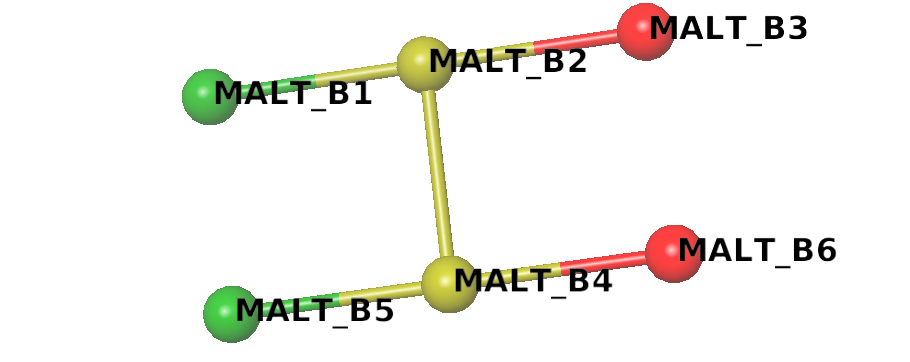
maltose |
|
See Ref. [5] |
|
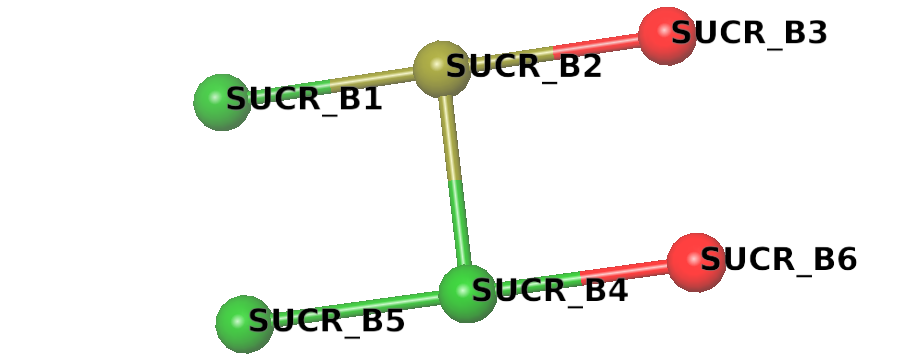
sucrose |
|
See Ref. [5] |
|
Polymers |
||
|
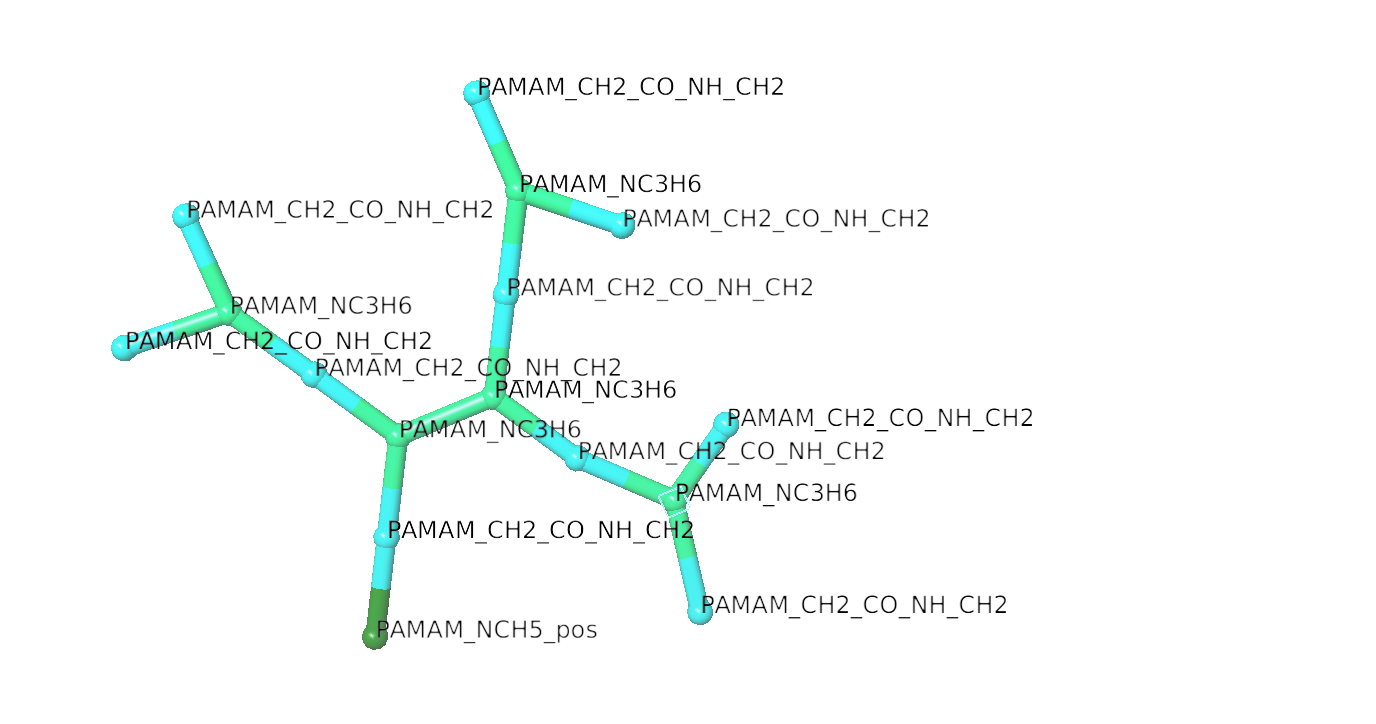
poly(amidoamine) PAMAM |
|
Dendrimer arms can end with either a neutral CH2-C(=O)-N(-H)-CH3 or positively charged CH2-NH3+. See Ref. [6] |
|
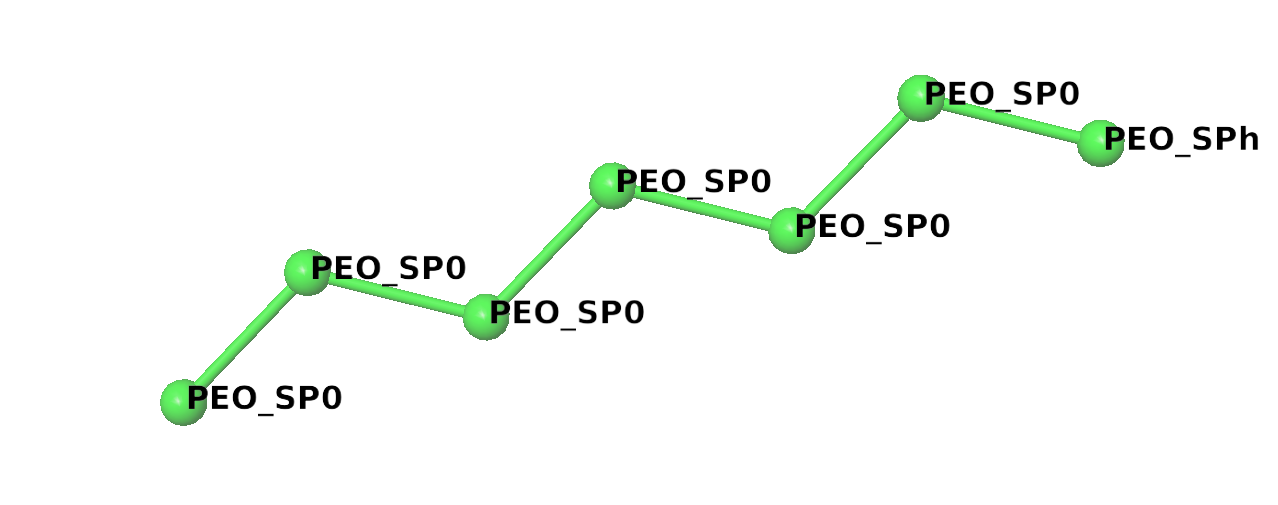
poly(oxyethylene) polymers (PEO/PEG) |
|
Chains can be terminated with either an OH (PEO_SPh, right end) or without (PEO_SP, left end O) [7]. |
|
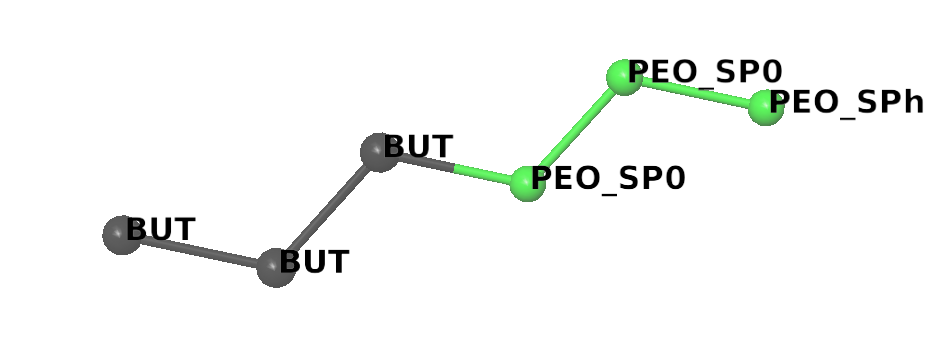
poly(oxyethylene) alkyl ether surfactant |
|
Example for C12E2. See Ref. [7]. |
|
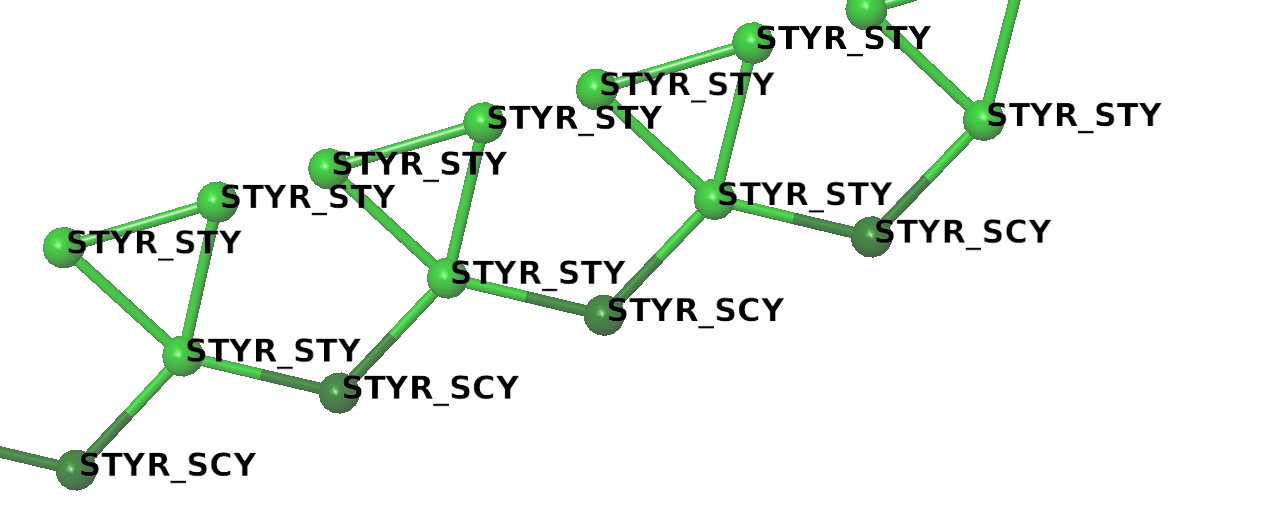
polystyrene |
|
Phenyl rings are represented by 3 STYR_STY sites. Adjacent phenyl rings are linked by STYR_SCY sites [8]. |





[1] The MARTINI Force Field: Coarse Grained Model for Biomolecular Simulations, S. J. Marrink et al., J. Phys. Chem. B 2007, 111, 7812-7824.
[2] Improved Parameters for the Martini Coarse-Grained Protein Force Field, D. H. de Jong et al., J. Chem. Theory Comput. 2012, 9, 687.
[3] Bulk Heterojunction Morphologies with Atomistic Resolution from Coarse-Grain Solvent Evaporation Simulations, R. Alessandri et al., J. Am. Chem. Soc. 2017, 139, 3697−3705.
[4] Coarse Grained Model for Semiquantitative Lipid Simulations, Siewert J. Marrink et al., J. Phys. Chem. B 2004, 108, 750.
[5] Martini Coarse-Grained Force Field: Extension to Carbohydrates, C. A. López et al., J. Chem. Theory Comput. 2009, 5, 3195.
[6] Coarse-grained molecular dynamics studies of the concentration and size dependence of fifth- and seventh-generation PAMAM dendrimers on pore formation in DMPC bilayer, H. Lee et al., J Phys Chem B. 2008, 112, 7778.
[7] A Coarse-Grained MARTINI Model of Polyethylene Glycol and of Polyoxyethylene Alkyl Ether Surfactants, G. Rossi et al., J. Phys. Chem. B 2012, 116, 14353.
[8] Coarse-graining polymers with the MARTINI force-field: polystyrene as a benchmark case, Giulia Rossi et al., Soft Matter 2011, 7, 698.
[9] The MARTINI Coarse-Grained Force Field: Extension to Proteins, Luca Monticelli et al., JCTC 2008, 819.